
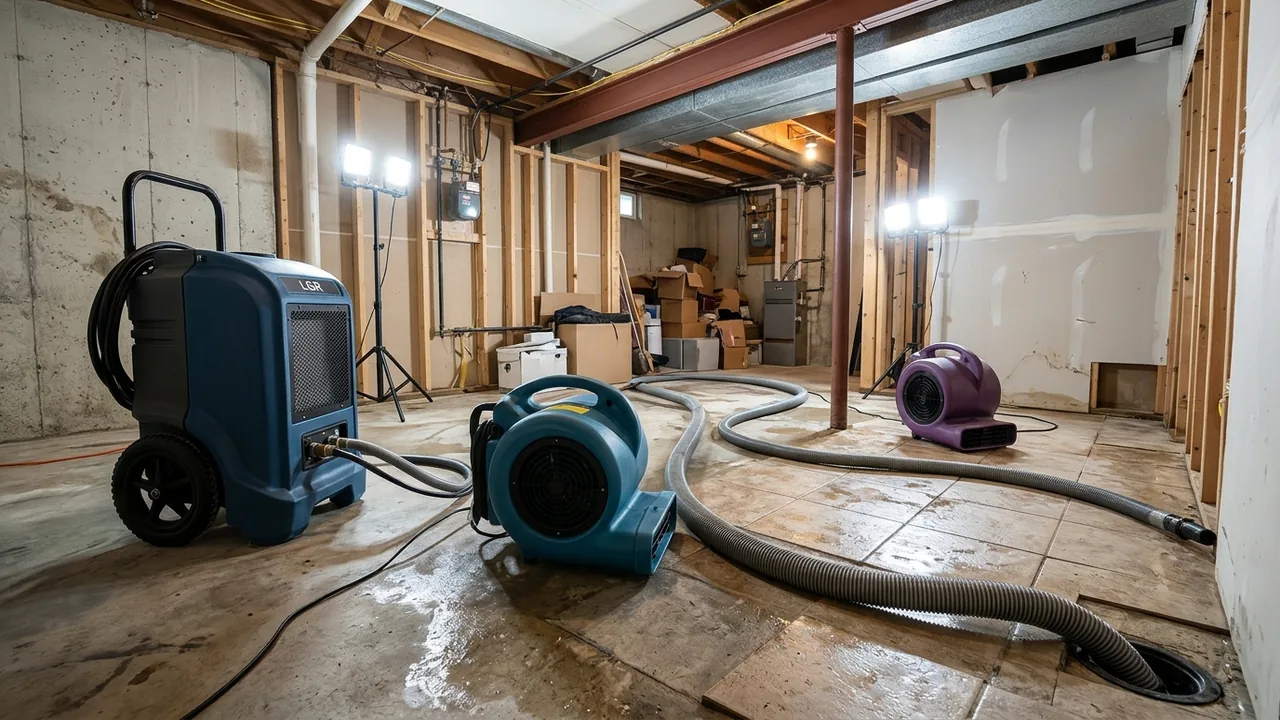
Does Utah Homeowners Insurance Cover Water Damage Restoration?
Standard Utah homeowners insurance (HO-3) policies generally cover sudden and accidental interior water damage—such as a burst frozen supply pipe, failed water heater tank, or ruptured washing machine hose—while typically excluding gradual leaks, exterior rising floodwater (which requires separate flood insurance), and sewer backups unless you carry a water-backup endorsement.
Navigating an insurance claim while water is soaking your finished basement in Eagle Mountain, Saratoga Springs, Cedar Fort, or Fairfield feels overwhelming if you have never filed a property loss before. While only your licensed insurance agent or adjuster can interpret your exact policy declarations page, knowing how insurers distinguish covered events from exclusions—and collecting clean evidence during the first 24 hours—protects your claim from avoidable delays.
Covered vs. Commonly Excluded Water Losses Under Standard Utah Policies
Insurance carriers focus heavily on two questions when evaluating a water claim: "Was the event sudden and accidental?" and "Did the water originate inside the home's plumbing system or outside on the ground?"
| Water Damage Scenario | Typical Standard HO-3 Treatment | Important Policy Caveat |
|---|---|---|
| Burst Frozen Supply Pipe | Usually Covered (Sudden & Accidental) | Policyholders must maintain reasonable heat in occupied/vacant winter homes; the broken pipe repair itself is often excluded while resulting water damage cleanup is covered. |
| Ruptured Water Heater or Appliance Hose | Usually Covered | Damage to flooring, drywall, and cabinetry is commonly covered; replacing the worn-out water heater or hose itself is typically homeowner maintenance. |
| Slow, Gradual Pipe or Roof Leak | Commonly Excluded | Long-term dripping under a sink or behind a shower pan that causes wood rot over months is usually treated as deferred maintenance. |
| Sewer or Sump Pump Backup | Excluded Unless Endorsement Added | Requires an optional Water Backup / Sump Overflow rider (often capped at $5,000–$25,000) to cover sewage backup cleanup. |
| Exterior Stormwater / Surface Flooding | Excluded Under Standard Policy | Rising groundwater or overland runoff entering basement window wells usually requires a separate NFIP or private flood insurance policy. |
Your Duty to Mitigate: Why You Should Not Wait for an Adjuster to Start Drying
Nearly every homeowners insurance contract includes a "Duties After Loss" clause requiring you to take reasonable emergency steps to protect the property from further damage—meaning you should start emergency water extraction promptly rather than letting standing water sit for three days waiting for an adjuster visit.
If an adjuster arrives four days after a pipe burst and discovers you left two inches of water sitting on basement carpet until they could inspect it in person, the insurer may refuse to pay for secondary mold growth or warped framing that occurred because mitigation was delayed. The right sequence is simple: stop the water source, document everything thoroughly with photos and video, call an independent local restoration crew through our Cedar Valley water damage restoration referral line to stabilize and dry the property, and open your claim with your carrier the same day.
Step-by-Step Water Damage Claim Documentation Checklist
Strong documentation removes ambiguity during claim review. Before any wet drywall is cut or soggy carpet pad is hauled away, capture every item on this checklist:
- Photograph the Origin Source First: Take clear wide-angle and close-up photos of the split pipe fitting, burst hose, or ruptured water heater tank—and save the broken part in a plastic bag until your adjuster confirms they do not need to inspect it.
- Record Continuous Walk-Through Video: Slowly pan across every affected room, showing standing water depth, soaked baseboards, ceiling stains, and adjacent unaffected rooms so the adjuster can understand the full floor plan.
- List Damaged Personal Property (Contents): Keep a simple spreadsheet or notebook listing ruined rugs, furniture, electronics, or basement storage items with approximate age and replacement cost. Do not throw away expensive ruined items until your adjuster approves disposal (unless they are Category 3 biohazards—photograph them thoroughly first).
- Request Industry-Standard Moisture & Psychrometric Logs: Independent restoration contractors routinely produce room sketches, thermal images, and daily moisture-meter drying charts showing why equipment ran for 3 to 5 days—see our structural drying timeline guide.
- Separate Mitigation Invoices from Rebuild Estimates: Insurance carriers normally process Emergency Mitigation (extraction, tear-out, LGR dehumidification, antimicrobials) separately from Reconstruction (new drywall, paint, trim, carpet). Keeping those two invoices distinct speeds up claim payments.
- Keep All Out-of-Pocket Receipts: Save receipts for plumber emergency repairs, temporary lodging (if your home is uninhabitable under Additional Living Expenses / Coverage D), or emergency supplies.
Should You File a Claim for a Small Water Leak?
Compare your estimated restoration cost against your policy deductible before opening a formal claim. If a minor localized supply leak in The Ranches or SilverLake costs $900 to extract and dry, and your homeowners deductible is $1,000 or $2,500, paying out of pocket avoids placing a zero-payout claim on your CLUE loss history report. On the other hand, a finished basement flood or multi-level burst pipe totaling $4,500 to $14,000+ is exactly what property insurance is built for. Use our Cedar Valley water damage cost calculator to preview ballpark Utah mitigation ranges before deciding how to proceed.
Questions to Ask Your Insurance Adjuster and Your Independent Contractor
Clear communication between you, your adjuster, and your chosen local contractor prevents surprise out-of-pocket bills:
- Ask Your Adjuster: "What is my exact water-damage deductible, do I carry a Water Backup endorsement, and does my policy cover Replacement Cost Value (RCV) or Actual Cash Value (ACV) for flooring and drywall?"
- Ask Your Adjuster: "Do you accept itemized mitigation estimates formatted in standard restoration software (such as Xactimate) directly from the independent contractor I select?" (In Utah, homeowners retain the right to choose their own qualified restoration contractor rather than feeling forced to use a single preferred vendor.)
- Ask Your Independent Contractor: "Are you currently licensed and insured in Utah, will you provide a written scope before starting non-emergency rebuild work, and will you share copies of all daily moisture logs and photos with me directly?"
Remember: never sign an open-ended contract you do not understand, and always verify contractor licensing and insurance before work begins. For fast answers on emergency drying, arrival, and costs, browse our Cedar Valley Water Restoration FAQ Hub.
How Restoration Estimates Work: Understanding Xactimate & Common Mitigation Line Items
Most independent water damage restoration contractors and Utah homeowners insurance adjusters use standardized estimating software (commonly Xactimate) with localized Utah County labor and equipment pricing—making it easier for adjusters to review transparent, itemized scopes.
Knowing the standard categories on a mitigation invoice helps you verify that every charge matches actual work performed on your property in Cedar Fort, Fairfield, Eagle Mountain, or Saratoga Springs:
| Invoice Line-Item Group | What It Covers | Documentation That Supports It |
|---|---|---|
| Emergency Service Call & Extraction | 24/7 dispatch mobilization, truck-mounted vacuum extraction per square foot, and submersible pumping. | Arrival timestamps, standing-water depth photos, and affected-room measurements. |
| Controlled Demolition & Disposal | Detaching baseboards, pulling unsalvageable carpet pad, 24-inch flood cuts, and hauling wet debris. | Before-and-after photos showing saturated pad, wet insulation, or Category 2/3 contamination. |
| Drying Equipment (Per Day) | Daily rental rates for air movers, LGR dehumidifiers, HEPA air scrubbers, and specialty floor mats. | Equipment placement sketch plus daily psychrometric drying logs proving moisture dropped each day. |
| Daily Monitoring & Antimicrobials | Technician return visits to check moisture meters, adjust airflow, and apply EPA-registered washes. | Dated technician moisture charts and safety data sheets (SDS) for any antimicrobial applied. |
How Recoverable Depreciation (RCV vs. ACV) Affects Your Payout
If your Utah homeowners policy pays Replacement Cost Value (RCV), your carrier often issues payments in two checks: an initial Actual Cash Value (ACV) check minus depreciation and your deductible, followed by a recoverable depreciation check once repairs are completed and invoiced. Knowing this two-step disbursement ahead of time prevents cash-flow surprises when scheduling drywall, baseboard, or carpet replacement after structural drying wraps up. Keep every paid contractor invoice, photo of completed work, and permit receipt organized in a single digital folder so you can submit them promptly to release any remaining recoverable depreciation.
Before signing a final claim release, review both the mitigation summary and the separate reconstruction estimate (new drywall, texture, paint, trim, and flooring) with your adjuster. If hidden damage appears once walls are opened—such as wet rim joists inside an adjoining crawl space or additional saturated subflooring—your independent contractor can submit a supplemental photo package and moisture reading update so your adjuster can review the expanded scope cleanly.
Frequently Asked Questions
Do I have to use the water restoration company my insurance company recommends?
No. Under standard homeowners insurance rules, you have the right to hire any qualified, licensed independent restoration contractor you trust, provided their scope and pricing align with standard industry documentation.
What is the difference between water mitigation and water reconstruction on an insurance claim?
Mitigation covers emergency water extraction, removing unsalvageable wet materials, antimicrobial cleaning, and structural drying; reconstruction covers rebuilding drywall, trim, paint, and new flooring once the structure is verified dry.
Will my insurance company pay for the plumber who fixed the burst pipe?
Most standard homeowners policies cover the resulting water damage restoration to your home's floors, walls, and ceilings, while excluding the cost of repairing or replacing the failed pipe or appliance itself.