
Basement Flood Cleanup in Cedar Valley, UT
Local Response for Cedar Valley Properties
Below-grade basements across Eagle Mountain, The Ranches, SilverLake, and Saratoga Springs act like collection basins whenever a sump pump fails, a water heater ruptures, or spring snowmelt presses against alkaline clay foundation soils. Through our Cedar Valley water damage restoration referral line, you can reach independent local crews ready to pump out and dry both unfinished storage basements and fully finished family rooms.
What This Restoration Service Involves
- Submersible pumping and emergency water extraction for standing water across concrete, tile, and basement carpeting.
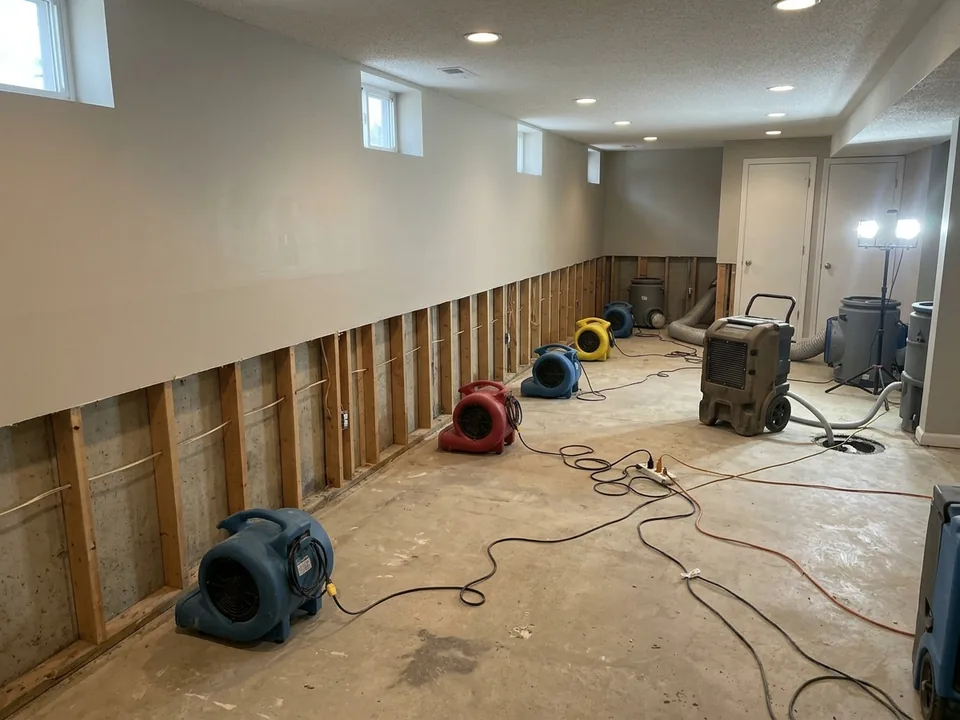
- Detaching baseboards and drilling weep holes—or performing clean 24-inch flood cuts—when drywall and fiberglass batt insulation have wicked water upward.
- Content elevation (blocking furniture on foam blocks or relocating boxes) to prevent rust stains and swelling.
- Balanced structural drying and dehumidification tailored to cool below-grade temperatures where evaporation slows down.
- Antimicrobial surface treatment when groundwater seepage or gray water is present (or full containment if a sewage backup occurred).
Common Warning Signs & Problems Addressed
- Water seeping through foundation wall cracks, cold joints, or basement window wells after heavy Utah rain or rapid snowmelt.
- A tripped sump pump breaker or silent float switch leaving standing water around the furnace and water heater.
- Musty basement odors, peeling baseboard paint, or bubbling drywall seams along exterior foundation walls.
- Damp carpet edges near basement bathrooms, laundry rooms, or utility chases.
Step-by-Step Field Mitigation Process
Because basements sit below grade with limited natural airflow, drying them requires careful psychrometric balance. Independent technicians first clear bulk water, lift saturated carpet and dispose of waterlogged pad, and inspect wall cavities with infrared cameras. If fiberglass insulation behind basement framing is wet, opening the lower 24 inches of drywall lets wet insulation be removed so pressure-treated sill plates and studs can dry completely without trapping mold.
Key Cost Factors in Utah County
Finished basements with carpeted bedrooms, framed partition walls, and wet insulation cost more to mitigate than open unfinished concrete basements. Water source (clean supply line vs. groundwater seepage vs. sewer backup) also changes sanitization and disposal requirements. Preview ranges on our cost calculator and check our basement mold prevention guide.
When to Call Immediately
Call for basement flood cleanup as soon as water enters the lower level—especially if water approaches your furnace burner chamber, water heater pilot, or low wall electrical outlets. Never wade into standing basement water if power to the lower level has not been safely shut off at the breaker panel.
Frequently Asked Questions
Do flooded basement walls always need to be cut open?
Not always. If clean water only dampened the surface and did not wick into insulated cavities, removing baseboards and injecting dry air can sometimes save drywall. When insulation is soaked or contaminated groundwater is involved, a 24-inch flood cut is standard practice.
Can wet basement carpet be saved after a flood?
Carpet saturated by clean Category 1 water can often be salvaged after professional extraction and cleaning, though the sponge-like carpet pad is usually replaced. Carpet soaked by Category 3 sewage or muddy runoff is typically discarded for health safety.
Why do basements take longer to dry than upstairs rooms?
Cooler below-grade temperatures and surrounding concrete walls slow natural evaporation, requiring higher dehumidification capacity and consistent air movement for 3 to 5 days.