
Emergency Water Extraction in Cedar Valley, UT
Local Response for Cedar Valley Properties
When a supply line fails or stormwater pours into a lower level, the first and most important physical step is bulk water removal. As part of our Cedar Valley water damage restoration referral network, calling (801) 555-0194 connects homeowners in Cedar Fort, Fairfield, and Eagle Mountain with independent local crews equipped with truck-mounted extractors and portable submersible pumps.
What This Restoration Service Involves
- Safety sweep of electrical panels, submerged outlets, and structural ceiling sag before stepping into standing water.
- Truck-mounted high-CFM vacuum extraction for deep carpet, padding, tile, and concrete slabs.
- Weighted rover extraction passes that compress saturated carpet backing to pull trapped water upward without tearing seams.
- Immediate moisture baseline readings with pin and pinless meters to map how far water traveled beneath adjacent rooms.
- Seamless handoff into structural drying and dehumidification once bulk water is cleared.
Common Warning Signs & Problems Addressed
- Pooling water deeper than a quarter inch on basement concrete, vinyl plank, or carpeted bedrooms.
- Squelching carpet padding or dark moisture rings spreading outward from a utility closet or water heater pan.
- Water seeping beneath interior partition walls toward hallways, closets, or adjacent finished rooms.
- A sudden burst pipe or failed washing machine hose flooding multiple rooms at once.
Step-by-Step Field Mitigation Process
Independent restoration technicians begin by confirming the water source is shut off and classifying the water as Category 1, 2, or 3. Next, they deploy submersible pumps for deep standing water (such as a flooded basement) followed by truck-mounted extraction wands across every saturated surface. Saturated carpet cushion that cannot be salvaged—especially in Category 2 or 3 losses—is cleanly removed and bagged so subfloor wood or concrete can breathe immediately.
Key Cost Factors in Utah County
Extraction pricing varies based on total affected square footage, water depth, whether furniture block-and-tab manipulation is needed, and whether the loss occurred after hours or involves contaminated water. You can estimate ballpark Utah ranges with our water damage cost calculator, then review a written scope directly with your contractor.
When to Call Immediately
Call immediately whenever water covers more than a small towel-sized spill or reaches baseboards, carpet padding, or electrical outlets. Household shop vacuums lack the suction lift needed to pull water out of carpet backing and subfloor seams, often leaving hidden moisture behind that triggers mold inside 48 hours.
Frequently Asked Questions
Can I use a household shop vac instead of emergency water extraction?
A household shop vac can pick up light surface puddles on bare tile, but it cannot extract water trapped inside carpet cushion, tack strips, or beneath floating LVP flooring. Commercial truck-mounted extractors generate far greater vacuum lift so drying equipment finishes faster.
Does emergency water extraction also dry my walls?
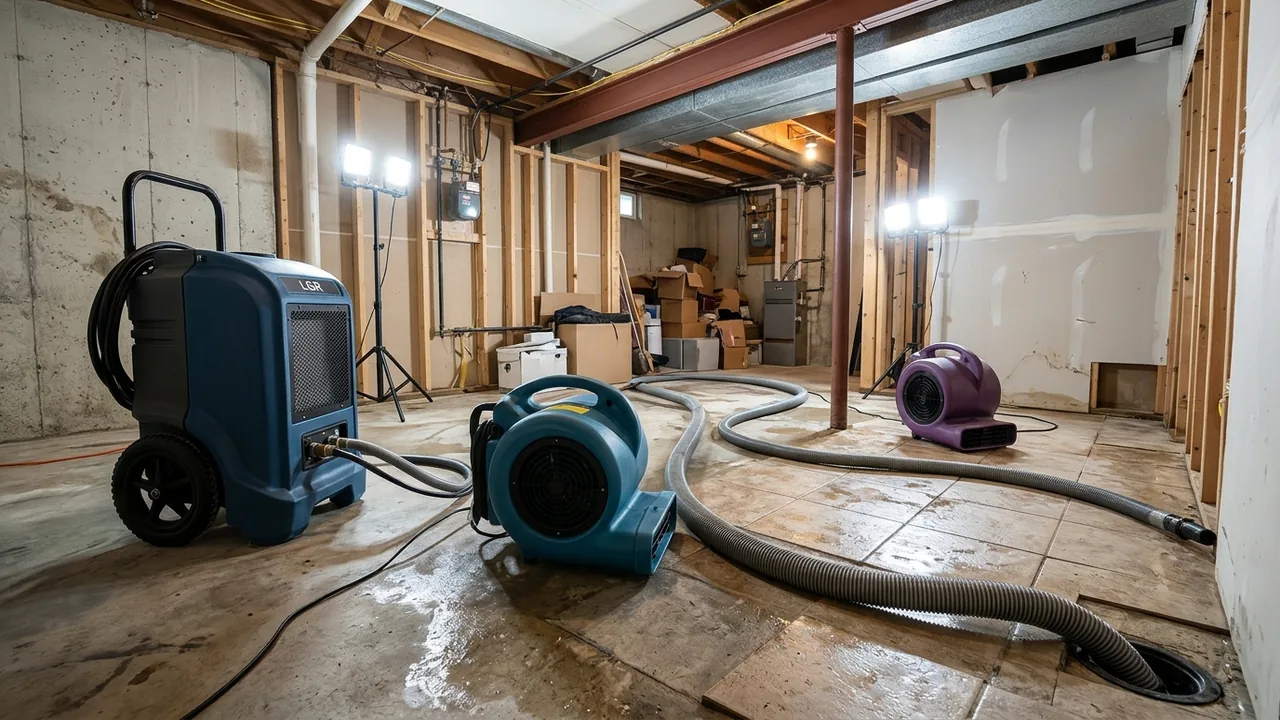
Extraction removes liquid standing water from floors and horizontal surfaces; drying moisture absorbed inside drywall, studs, and subfloors requires follow-up commercial air movers and LGR dehumidifiers.
How soon should standing water be extracted after a leak?
Standing water should be extracted as soon as the source is shut off—ideally within the first few hours—because clean Category 1 water can degrade into contaminated water and swell wood framing within 24 hours.