
Crawl Space Water Removal in Cedar Valley, UT
Local Response for Cedar Valley Properties
Many older ranch homes, farmhouses, and additions across Cedar Fort and Fairfield—as well as split-level properties around Eagle Mountain—sit over dirt or gravel crawl spaces. Because homeowners rarely inspect beneath their floors, a slow drain leak, frozen supply pipe, or spring snowmelt intrusion can pool unnoticed for days. Our Cedar Valley water damage restoration referral line connects you with independent crews equipped for tight-access crawl space extraction and drying.
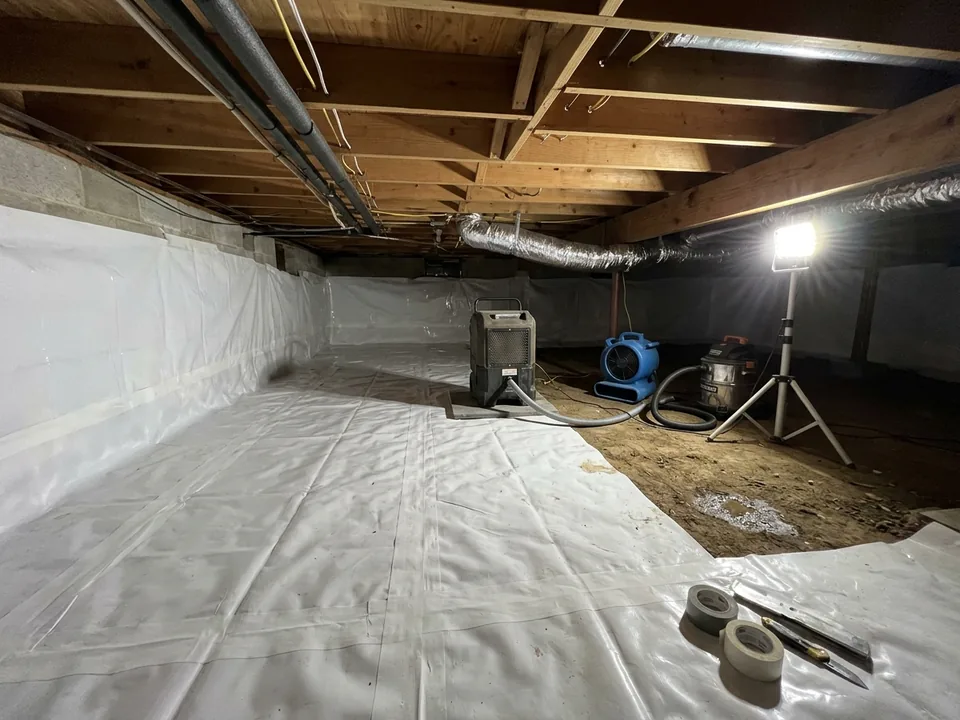
What This Restoration Service Involves
- Low-clearance submersible pumping and mud/silt clearing around foundation footings and piers.
- Inspection and removal of sagging, waterlogged fiberglass batt insulation hanging between floor joists.
- Drying wooden rim joists, girders, and plywood subfloors using compact commercial crawl space dehumidifiers and directional air movers.
- Antimicrobial treatment of damp soil surfaces and wooden framing when groundwater or plumbing leaks caused elevated humidity.
- Repairing or resetting torn polyethylene vapor barrier sheeting once the subfloor reaches dry standards.
Common Warning Signs & Problems Addressed
- Earthy, musty odors rising through floor registers or noticeable cupping in main-level hardwood planks.
- Visible water pooling on top of or underneath crawl space plastic sheeting after snowmelt or a pipe leak.
- Sagging, dark-stained fiberglass insulation drooping down from the subfloor joists.
- Unexplained spikes in indoor humidity or condensation on ductwork running beneath the house.
Step-by-Step Field Mitigation Process
Independent restoration technicians enter the crawl space with protective gear and low-voltage work lights, identify the water category (checking carefully for any sewer or drain line leak), and pump out standing water. Next, they pull down saturated insulation that traps moisture against wood joists, stage compact LGR dehumidifiers and air movers, and track wood moisture readings daily via structural drying protocols.
Key Cost Factors in Utah County
Crawl space mitigation costs depend on clearance height, access-hatch location, total square footage, whether wet insulation must be removed and bagged, and whether contaminated drain water is present. Estimate a ballpark range with our cost calculator.
When to Call Immediately
Call as soon as you spot standing water, dripping subfloor plumbing, or persistent dampness beneath your home. Up to half of the air on your first floor can draw upward from the crawl space via the stack effect, carrying moisture and mold spores indoors.
Frequently Asked Questions
Will water in a dirt crawl space just soak into the ground on its own?
Even if surface puddles eventually seep into Cedar Valley soil, the trapped humidity saturates floor joists, subfloor plywood, and fiberglass insulation—creating ideal conditions for wood rot and mold growth.
Does wet crawl space insulation have to be removed?
Yes in most cases. Waterlogged fiberglass loses its R-value, sags away from the subfloor, and holds trapped moisture directly against wooden joists until removed.
How long does it take to dry a flooded crawl space?
After standing water is pumped out and wet insulation is cleared, commercial crawl space dehumidifiers typically dry wooden framing within 3 to 5 days depending on seasonal temperatures.